Journal — 03
Tavli, Nard, backgammon: one board, many names
From Persia through Greece to a bar at Kreuzplatz — the journey of a game nobody has forgotten in five thousand years.
There are not many things people have done continuously for five thousand years. Backgammon is one of them. Boards found at Ur, in what is now Iraq, are close enough to the modern one that you could sit down and play. Since then the game has crossed every culture that touched it, and picked up a different name in each.
Nard
In the Persian world it is Nard. A medieval text sets it against chess: chess as the game of pure intellect, nard as the game of fate, where a person only decides what to do with what they are dealt. That is still the best description of the game anyone has written.
Tavli
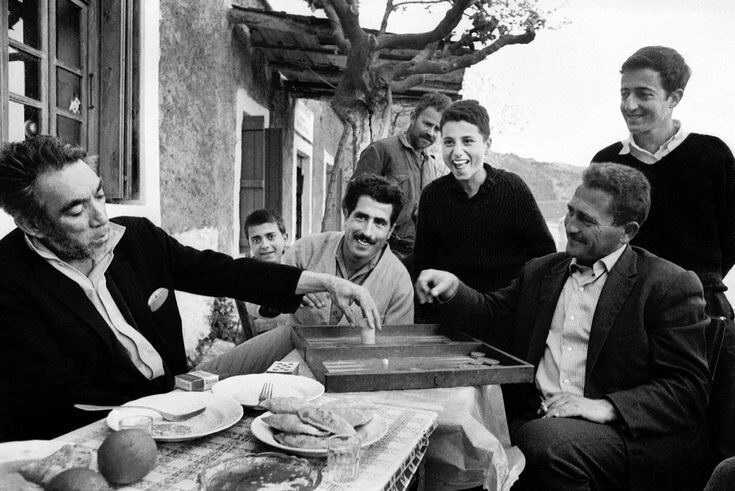
In Greece it is távli, and it is less a game than a time of day. In the kafeneío you don't play one game but three variants in sequence — pórtes, plakotó and févga — and whoever wins the series wins. Coffee is part of it. So is noise. So are spectators offering advice nobody asked for.
Tavla
In Turkey it is tavla, and the dice are called out in Persian: yek, du, se, çähar, penç, şéş. A player who doesn't call the numbers isn't really playing.
Backgammon
The English name appears in the 17th century — probably from back and game, because hit checkers have to go back. What really changed the game in the 20th century was an American invention: the doubling cube, born in New York clubs in the 1920s. It turned an old family game into one adults played for something.
The same board, the same fifteen checkers, the same argument about the same double.
And in Zürich
All of these versions are already here. They sit in Greek restaurants, in Turkish cafés, in the flats of people who played with their grandfathers. What was missing was a table where they meet — and where somebody who knows none of it can simply sit down.
That is what the club is. We play the international version because it explains fastest. But if somebody wants to teach pórtes, we'll happily clear a table.